


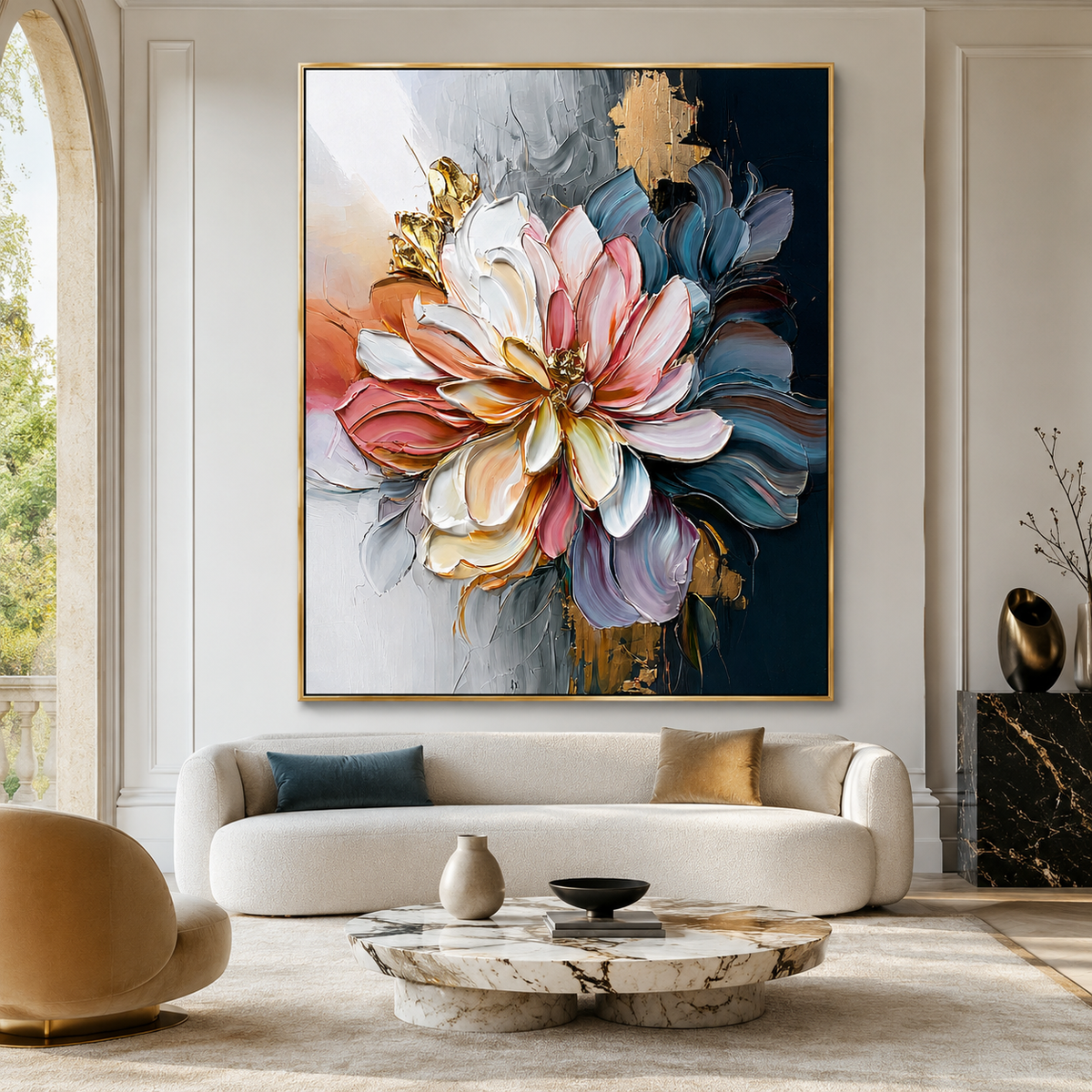

Have you ever walked into a beautifully furnished room and still felt that something was missing?
The furniture may be carefully chosen. The colors may work together. The lighting may be warm and inviting. Yet the space can still feel slightly unfinished.
Very often, what is missing is not another piece of furniture or another decorative object. It is a visual element that gives the room character and emotional direction.
That is where art becomes important.
A painting does more than fill an empty wall. Through color, scale, texture and subject, it influences where the eye travels, how the furniture feels in relation to the room and, most importantly, the mood of the space.
The right artwork can make a quiet room feel warmer, a neutral room feel more expressive, or a large space feel more grounded.
So when choosing wall art, the question is not simply, “Does this match my interior?”
A more useful question is:
How do I want this room to feel?
Art Gives the Room a Visual Center
Every well-balanced room needs something that naturally catches the eye.
Sometimes it is a fireplace, a dramatic window or a beautiful architectural detail. But in many homes, especially in living rooms and bedrooms, artwork becomes the main focal point.
A large painting above a sofa immediately gives the wall structure. Instead of seeing a sofa below and an empty wall above it as two separate areas, the artwork visually connects them.
This can make the entire room feel more intentional.
The same idea works above a bed, dining console or entryway cabinet. A painting provides a point of focus while allowing the rest of the room to remain relatively simple.
This is also why one substantial artwork can sometimes feel more effective than several small decorative pieces.
You do not always need more objects.
Sometimes the room simply needs one strong element to bring everything together.
Color Changes the Emotional Temperature of a Space
Color has an immediate emotional effect.
A room filled with beige, cream and warm wood may already feel comfortable, but introducing a painting with olive green, muted blue or amber can completely change its personality.
Soft blue and green tones tend to create a calmer feeling.
Warm ochre, terracotta, rust and brown can make a room feel more intimate and inviting.
Lighter paintings may help a room feel airy, while deeper and richer colors can create a more dramatic atmosphere.
But this does not mean your artwork should perfectly match your sofa, rug and curtains.
In fact, a room often becomes more interesting when the art introduces a color that does not appear everywhere else.
Imagine a neutral living room with a warm brown leather sofa. A landscape containing sage green, pale blue and golden fields introduces new colors without feeling disconnected.
Those tones can then be repeated very subtly through a cushion, ceramic vase or small decorative object.
The room feels connected, but not overly coordinated.
A home should feel collected rather than color-matched.
Scale Can Make a Room Feel More Complete
The size of the artwork has a surprisingly large influence on the room.
A painting that is beautiful on its own may still feel wrong if it is too small for the wall or furniture beneath it.
For example, a small piece placed alone above a long sofa can appear as if it is floating in the middle of a large empty surface.
A larger painting creates a stronger relationship between the furniture and the wall.
It gives the eye a clear place to settle and often makes the furniture itself feel more grounded.
This does not mean that bigger is always better.
The goal is balance.
There should still be enough negative space around the painting for the composition to breathe.
Interestingly, large wall art can also work beautifully in smaller rooms.
Many people assume that a small room requires small artwork, but several tiny pieces may actually make the space feel busier.
One well-proportioned painting can create a cleaner, calmer visual statement.
Texture Brings Life to the Wall
Color is easy to notice in a photograph.
Texture is something you often appreciate more when living with the artwork.
This is particularly true with hand-painted oil paintings and impasto artwork.
Visible brushstrokes, layered paint and raised surfaces react differently to light throughout the day.
In soft morning light, the texture may appear subtle.
As daylight becomes stronger, individual brushstrokes and raised areas become more noticeable.
In the evening, side lighting can create tiny shadows across the surface, giving the painting more depth.
The artwork never feels completely static.
This quality also works beautifully with interiors that already include natural materials.
Linen, wood, leather, stone, wool and handmade ceramics all have physical texture. A textured painting becomes part of that same visual language.
Instead of adding more accessories to create interest, the artwork itself provides another layer.
That can make the room feel richer without making it feel cluttered.
The Subject of the Painting Shapes the Atmosphere
What you see inside the painting matters just as much as its color.
A wide landscape may create a feeling of distance and openness. Fields, mountains, coastlines and distant horizons visually extend the room beyond its physical walls.
Floral and botanical paintings often bring softness and movement.
Abstract artwork can introduce energy, rhythm or calm depending on the colors and composition.
Western scenes, horses and pastoral landscapes can create warmth and character, while figurative paintings often feel more expressive and personal.
There is no universally correct subject for a particular room.
A living room does not automatically need a landscape.
A bedroom does not automatically need soft abstract art.
Your emotional response should play a role.
If a painting makes you feel calm, curious, nostalgic or inspired, that reaction may be more important than whether the subject perfectly follows a decorating rule.
Good Art Does Not Have to Match Everything
One of the easiest ways to make a room feel too designed is to make everything match.
The wood tones match.
The cushions match.
The rug matches.
The painting repeats the exact same colors.
Technically, nothing is wrong.
But sometimes the result feels predictable.
Art can provide the contrast that gives a room personality.
A traditional landscape can look surprisingly beautiful inside a contemporary interior.
A modern abstract painting can introduce freshness into a room with vintage furniture.
A bold textured painting can give character to an otherwise restrained neutral room.
The aim is not perfect matching.
The aim is visual harmony.
Artwork can be different from the furniture while still feeling connected through one shared element, perhaps color, mood, texture or proportion.
This usually creates a room that feels more natural and collected over time.
Placement Changes the Relationship Between Art and Furniture
Even the right painting can feel awkward when it is hung incorrectly.
One common mistake is placing artwork too high.
When a painting sits far above the furniture, the two elements may appear disconnected.
Instead, artwork above a sofa, bed or console should feel visually connected to the furniture below it.
Another common issue is choosing a piece that is too small for a large wall.
In this situation, the empty space around the artwork becomes more noticeable than the artwork itself.
Placement can also help define different areas within an open-plan home.
A large painting near a dining table can visually establish the dining zone.
A strong artwork in an entryway can introduce the personality of the home immediately.
In a living room, artwork can help anchor the main seating area.
Wall art is therefore not simply decoration placed after the room is finished.
It can become part of the way the room itself is organized.
Light Changes the Way We Experience a Painting
A painting does not exist separately from the light around it.
Natural daylight changes throughout the day, and the artwork changes with it.
Morning light may emphasize softer colors.
Midday light can reveal stronger contrasts and surface texture.
In the evening, warmer lighting can make earthy colors feel richer and deeper.
This is particularly noticeable with textured oil paintings because raised paint catches light differently depending on the viewing angle.
You do not need strong direct sunlight.
In fact, soft indirect daylight often creates a more comfortable viewing experience.
Before choosing the final position for a painting, it can be helpful to observe the wall during different times of day.
A location that seems ordinary in the morning may become beautifully illuminated in the afternoon.
The Best Art Makes a Home Feel More Personal
Interior trends change quickly.
A color that feels fashionable today may look different in a few years.
Furniture may eventually be replaced, and walls may be repainted.
But artwork often stays much longer.
Over time, a painting becomes connected to the life happening around it.
You may remember where you were when you bought it, why you originally chose it, or simply how it has become part of the everyday background of your home.
This is why choosing artwork should not be based entirely on trends.
The most important pieces are often the ones you continue wanting to look at.
Maybe you love a landscape because it reminds you of travel.
Perhaps a certain combination of colors makes you feel relaxed.
Maybe you are simply drawn to visible brushwork and handmade texture.
Those reactions matter.
A home becomes more interesting when it reflects the people living inside it rather than simply following a decorating formula.
Living With Art
The right painting does more than fill an empty wall.
It can bring warmth to a large room, give personality to a neutral space and create balance between furniture, color and architecture.
It can also change throughout the day as natural light moves across its surface.
This is why choosing art is ultimately about more than decoration.
You are choosing something you may see every day for years.
And sometimes, one thoughtfully chosen painting is all it takes to make a room finally feel complete.
Frequently Asked Questions
Q1. Can one painting really change the feeling of a room?
Yes. A single artwork can introduce a focal point, color, texture and visual balance. This can noticeably change how the entire room feels, especially when the surrounding interior is relatively simple.
Q2. Should wall art match my sofa?
It does not need to match exactly. It is often better to choose artwork that shares one or two colors or a similar mood with the room while still introducing some contrast.
Q3. How do I know if artwork is too small for my wall?
If the painting appears isolated and the empty wall around it attracts more attention than the artwork, the scale may be too small. Consider both the wall size and the furniture underneath it.
Q4. Is one large painting better than several small paintings?
Neither is always better. One large painting usually creates a cleaner and stronger focal point, while several pieces can create a more collected or gallery-like feeling.
Q5. What is the easiest way to choose art for my home?
Start with how you want the room to feel rather than trying to match every color. Look for a painting whose subject, palette or texture creates an emotional response you would enjoy living with.

