

Why Art Matters More in Small Spaces
In a small room, every visual element has more impact.
Furniture, lighting, wall color, and artwork all influence how open or crowded the space feels.
The wrong artwork can make a small room feel busy.
The right artwork can do the opposite.
A carefully chosen painting can create depth, draw the eye outward, and give the room a stronger focal point.
Instead of thinking that small rooms always need small art, it is often better to think about proportion, composition, and visual clarity.
Choose Artwork With Visual Depth
Artwork that creates a sense of distance can make a room feel more open.
Landscape paintings are especially effective because they naturally guide the eye into the image.
Open fields, distant mountains, coastlines, rivers, and wide horizons all create visual depth.
This effect can make a wall feel less flat.
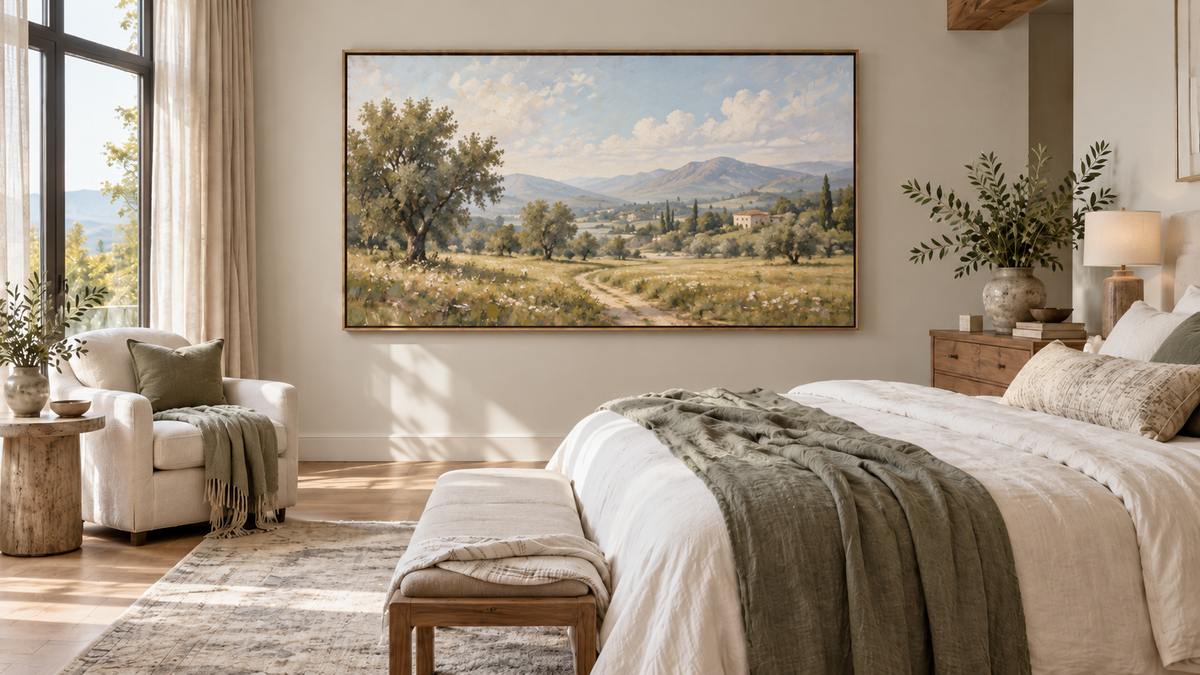
In a small living room or bedroom, a landscape painting can almost act like another window.
Vintage American landscapes, Western scenes, and quiet countryside paintings can also work well because they combine depth with warmth and character.
Do Not Be Afraid of Larger Art
Many people assume that a small room needs several small artworks.
That is not always true.
A single larger painting can actually make the room feel calmer.
Several small pieces create more edges, gaps, and visual interruptions.
One substantial artwork gives the eye a clearer place to rest.
This can make the wall feel more organized.
Above a small sofa, bed, or console, one medium-to-large painting may feel more balanced than many tiny pieces.
Scale should relate to the furniture, not only to the overall room size.
Use Lighter and Softer Colors
Color has a strong effect on how spacious a room feels.
Artwork with lighter backgrounds and softer tones can help maintain an open atmosphere.
Useful colors include:
- Soft blue
- Warm beige
- Cream
- Muted green
- Pale gray
- Dusty earth tones
This does not mean the artwork has to be completely neutral.
A few deeper accents can add contrast.
The key is avoiding a painting that feels visually heavy in a room already limited in size or natural light.
Keep the Composition Open
The composition inside a painting can also influence the room.
Artwork with large areas of sky, open land, water, or negative space tends to feel more expansive.
Very dense compositions with many small details can sometimes feel visually heavier.
This is especially important in narrow rooms.
A wide landscape with a clear horizon can visually extend the wall.
A minimal abstract with open areas can create a similar effect in more contemporary interiors.
The painting should give the eye room to move.
Use Horizontal Art to Make a Wall Feel Wider
Horizontal artwork naturally emphasizes width.
This makes it especially useful in small living rooms, bedrooms, and dining areas.
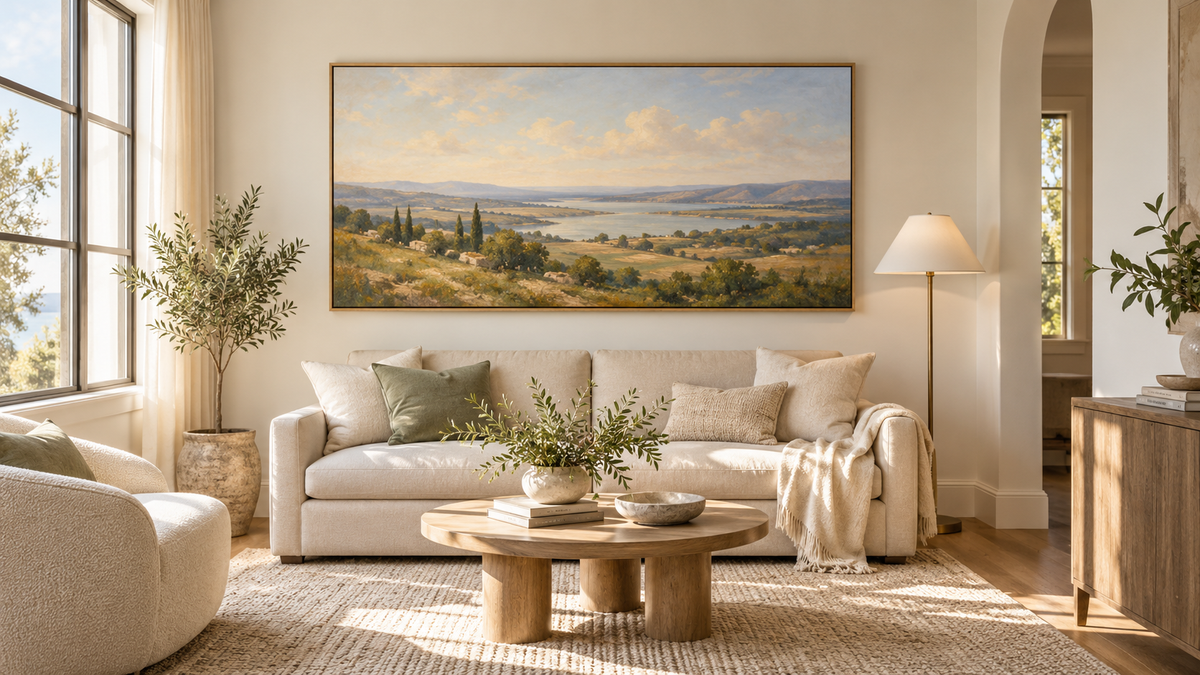
A wide landscape above a sofa can make the wall appear broader.
A horizontal abstract above a bed can create a calm and stable visual line.
Vertical paintings still work well in narrow areas, but when the goal is to make the room feel wider, horizontal compositions are usually more effective.
Leave Space Around the Artwork
Small rooms benefit from visual breathing room.
Avoid filling every available wall with decoration.
One carefully placed artwork with empty space around it can feel much more sophisticated than several tightly grouped objects.
This surrounding space helps the painting stand out.
It also reduces visual clutter.
In a compact room, every empty area becomes part of the composition.
Sometimes removing one extra object can make the artwork and the room feel stronger.
Let Texture Add Interest Without Clutter
Small spaces still need personality.
The challenge is adding detail without making the room feel crowded.
Hand-painted oil paintings are useful because texture adds interest within the artwork itself.
Visible brushwork and layered paint create depth without requiring more decorative objects around the room.
Natural light can reveal different parts of the surface throughout the day.
This gives the room visual richness while keeping the overall layout simple.
Use Art to Create One Clear Focal Point
A small room often feels better when there is one main visual focus.
Artwork can serve that role.
Instead of allowing the eye to jump between many small decorations, use one strong painting to organize the space.
Above a sofa, bed, or console, the artwork can visually anchor the room.
This makes the interior feel more deliberate.
A clear focal point also helps the rest of the room feel calmer.
Choose Frames That Stay Visually Light
Frames matter in small spaces.
Very thick or highly decorative frames can sometimes make artwork feel heavier.
Simple wood, slim black, bronze, or understated antique-style frames usually work more easily.
The frame should support the painting rather than dominate it.
In light interiors, a thin darker frame can create definition.
In warmer spaces, natural wood can blend more softly with the room.
Match the Artwork to the Light in the Room
Natural light affects how spacious a room feels.
Artwork should work with that light rather than fight against it.
In darker rooms, lighter paintings can help keep the wall from feeling heavy.
In bright rooms, slightly deeper colors can add contrast without making the space feel smaller.
Also consider how light changes throughout the day.
A hand-painted surface can look very different in soft morning light and stronger afternoon light.
That variation adds depth without adding clutter.
Avoid Overdecorating the Wall
Small spaces do not need more decoration.
They need better decisions.
One common mistake is trying to fill every empty area with shelves, mirrors, prints, and objects.
This can quickly reduce the sense of openness.
Instead, choose fewer pieces with stronger presence.
A well-scaled painting can often do more for a small room than several smaller accessories.
Simplicity creates space.
Final Thoughts
Choosing art for a small room is not about making everything smaller.
It is about creating visual clarity.
Use artwork with depth.
Choose appropriate scale.
Keep the composition open.
Use color carefully.
Leave breathing room.
And allow one strong painting to become the focal point.
A wide landscape can make a wall feel more expansive.
A restrained abstract can add movement without clutter.
A hand-painted oil painting can introduce texture while keeping the room visually simple.
Small rooms do not need less personality.
They simply need more intentional choices.
Frequently Asked Questions
What type of art makes a small room feel bigger?
Landscapes, open compositions, horizontal artwork, and paintings with lighter or softer colors can help create a sense of space.
Should I use large art in a small room?
Yes. One larger artwork can often make a small room feel calmer and more organized than several small pieces.
What colors work best for small spaces?
Soft blue, warm beige, muted green, cream, pale gray, and other light or natural tones usually work well.
Are landscape paintings good for small rooms?
Yes. Landscapes can create visual depth and make the wall feel more open.
Should I avoid dark artwork in small rooms?
Not necessarily. Dark artwork can work if the room has enough light and the surrounding decor remains simple.