

Why Art Has Such a Strong Effect on Mood
Artwork influences a room in ways that go beyond decoration.
Color, composition, subject, and scale can all affect how a space feels.
A busy painting with strong contrast can add energy.
A quiet landscape with soft colors can create the opposite effect.
For rooms designed for rest and comfort, artwork should support the atmosphere rather than compete with it.
This is especially important in bedrooms, reading areas, living rooms, and other spaces where people want to slow down.
The goal is not to make the room empty or overly minimal.
It is to create visual calm.
Start With Soft and Natural Colors
Color is one of the easiest ways to create a peaceful feeling.
Soft, muted tones generally feel more relaxing than highly saturated colors.
Useful colors include:
- Warm beige
- Soft blue
- Muted green
- Cream
- Pale gray
- Taupe
- Dusty brown
These tones work especially well with natural materials such as wood, linen, stone, and wool.
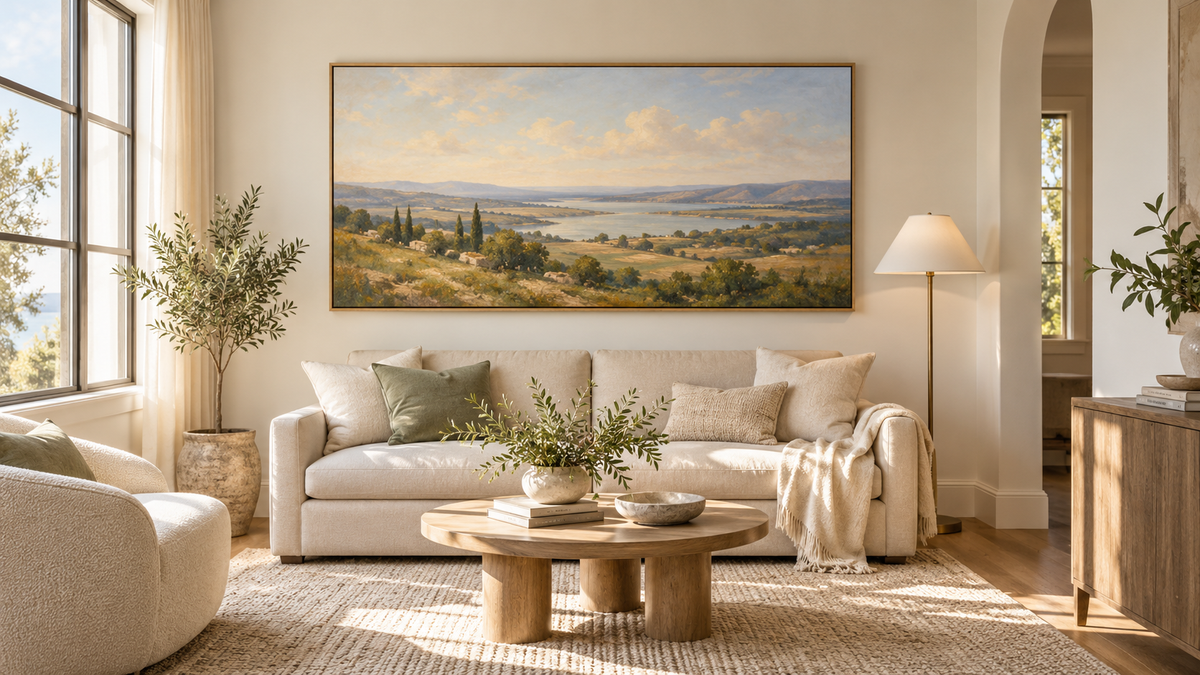
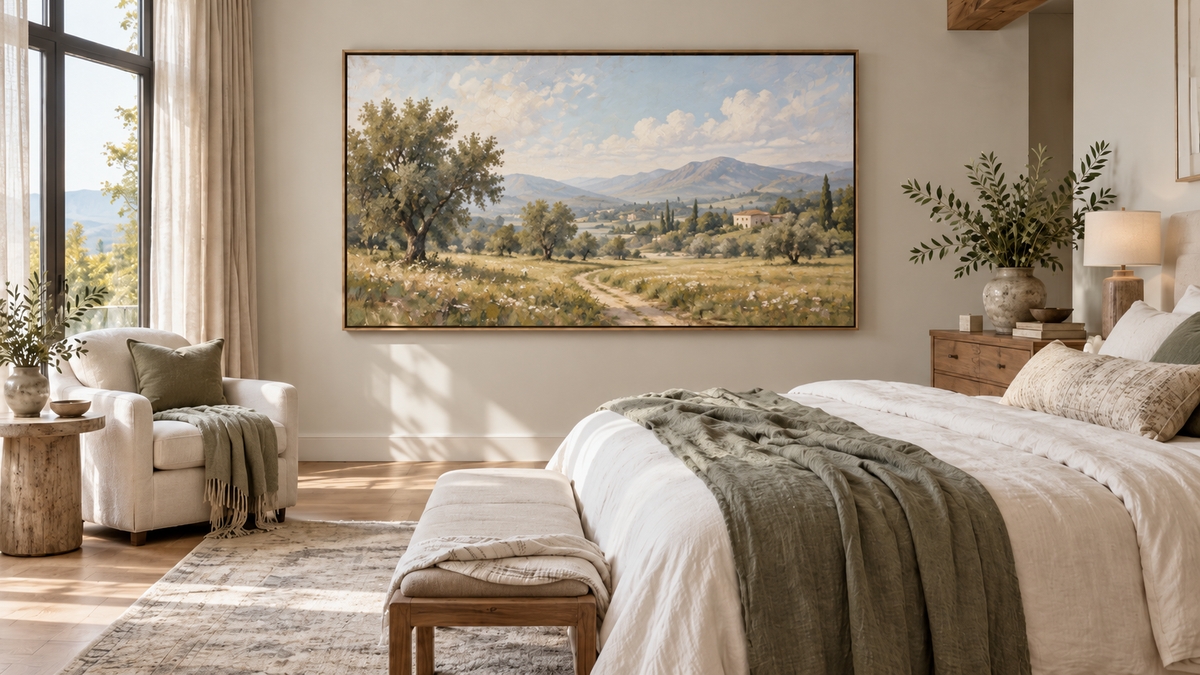
A landscape painting with soft blue and green tones can make a bedroom feel lighter.
A warm beige abstract can help a living room feel quieter.
The key is to choose colors that feel comfortable over time.
Landscape Art Naturally Creates Calm
Landscape paintings are one of the strongest choices for relaxing interiors.
They often include open spaces, distant views, water, fields, mountains, and sky.
These elements naturally create depth and visual breathing room.
A wide horizon can make the eye travel into the distance.
A quiet river or lake can soften the room.
Rolling hills and open fields can create a sense of stability.
This is why landscape art works especially well in bedrooms, living rooms, and quiet sitting areas.
Choose Open Compositions
The amount of visual space inside the painting matters.
Artwork with large areas of sky, water, open land, or negative space tends to feel calmer.
Very dense artwork with many small details can be more stimulating.
For a relaxing room, consider compositions that allow the eye to move slowly through the image.
Minimal abstract paintings can work for the same reason.
They do not need to be empty.
They simply need enough visual space to avoid feeling crowded.
Use Larger Art Instead of Many Small Pieces
A calm room often benefits from fewer visual elements.
Instead of placing many small artworks across one wall, one larger painting can create a cleaner focal point.
This reduces visual interruptions.
Above a bed or sofa, a single horizontal artwork can make the wall feel balanced and complete.
A large painting also creates a stronger relationship with the furniture.
The result often feels more intentional and less busy.
Let Hand-Painted Texture Add Quiet Depth
A peaceful interior does not have to feel flat.
Hand-painted artwork can add depth through texture rather than strong color.
Visible brushwork, layered oil paint, and subtle surface variation create interest without making the room feel visually noisy.
Natural light also changes the surface throughout the day.
Morning light may soften the brushwork.
Side light later in the day may reveal more texture.
This gives the artwork quiet movement while keeping the overall atmosphere relaxed.
Keep the Palette Connected to the Room
Artwork does not need to perfectly match the furniture.
But a few shared tones can help create harmony.
For example:
- Soft green can relate to natural fabrics.
- Warm brown can connect with wooden furniture.
- Cream and beige can echo upholstery.
- Muted blue can introduce gentle contrast.
The goal is not exact coordination.
It is subtle connection.
When colors feel related, the room becomes more visually comfortable.
Avoid Too Much Contrast
Strong contrast creates energy.
That can be useful in some rooms, but it is usually less suitable when the goal is relaxation.
Very bright colors against very dark backgrounds can become visually dominant.
Instead, choose softer transitions.
A painting can still contain dark tones, but they should feel balanced within the composition.
Gentle contrast usually allows artwork to remain interesting without overwhelming the room.
Consider Where You Will See the Artwork Most Often
Placement matters.
In a bedroom, artwork above the bed becomes part of the overall room composition.
In a living room, artwork across from the sofa may remain in view for long periods.
In a reading corner, a smaller painting can create a quieter and more intimate feeling.
Think about how often you will look at the artwork and from what distance.
Relaxing art should feel comfortable enough to live with every day.
Natural Subjects Often Feel More Restful
Nature-inspired subjects tend to work particularly well in calming interiors.
Common examples include:
- Landscapes
- Coastal scenes
- Mountains
- Lakes
- Open fields
- Botanical subjects
- Quiet rural scenery
These subjects often contain organic shapes and natural color relationships.
They also bring a small sense of the outdoors into the home.
This can help a room feel less enclosed and more connected to nature.
Keep the Surrounding Wall Simple
Artwork needs space around it.
This is especially true in a relaxing interior.
Avoid surrounding the painting with too many shelves, signs, decorative objects, or competing wall pieces.
Some empty wall space helps the artwork breathe.
It also makes the entire room feel less crowded.
A peaceful interior is often created not only by what you add, but by what you choose to leave out.
Choose Art You Will Not Tire of Quickly
Relaxing artwork should work over the long term.
Highly trend-driven pieces may feel exciting at first but can become tiring.
Consider artwork that has enough personality to stay interesting, but enough restraint to remain comfortable.
Ask yourself:
Would I enjoy seeing this every morning?
Would it still work if I changed the furniture?
Does it create the feeling I want the room to have?
If the answer is yes, the artwork is more likely to become a lasting part of the home.
Final Thoughts
Creating a calm home does not mean removing all color or personality.
It means making more intentional choices.
Use soft colors.
Choose open compositions.
Consider natural subjects.
Keep the scale balanced.
Allow space around the artwork.
And use texture to add depth without adding visual clutter.
A quiet landscape can make a bedroom feel more restful.
A soft abstract can make a modern living room feel less rigid.
A hand-painted oil painting can add warmth and texture while keeping the space calm.
The best relaxing interiors are not empty.
They simply feel balanced.
Frequently Asked Questions
What type of artwork is best for a relaxing home?
Landscapes, coastal scenes, botanical art, soft abstract paintings, and other nature-inspired artwork are all strong choices.
What colors make artwork feel calmer?
Muted blue, soft green, warm beige, cream, pale gray, and other low-saturation colors generally feel more relaxing.
Is large artwork good for a calm room?
Yes. One large painting can reduce visual clutter and create a clearer focal point.
Are landscape paintings good for bedrooms?
Yes. Landscapes with open compositions and soft colors are especially suitable for bedrooms.
Should relaxing artwork be completely neutral?
No. Soft color can make a room feel more personal while still maintaining a peaceful atmosphere.