

Why Vintage Art Works So Well in Modern Homes
Modern interiors are often defined by clean lines, simple furniture, neutral colors, and open space.
These qualities create a calm environment, but they can sometimes make a room feel slightly too polished or impersonal.
Vintage-inspired artwork introduces contrast.
A landscape, ranch scene, Western painting, or traditional still life can add history and emotion to a contemporary room without changing the entire decorating style.
That contrast between old and new often makes a home feel more collected.
Instead of looking like everything was purchased at the same time, the space begins to feel as though it developed gradually.
Start With One Strong Vintage Piece
You do not need to fill a modern home with vintage objects.
In many cases, one carefully chosen painting is enough.
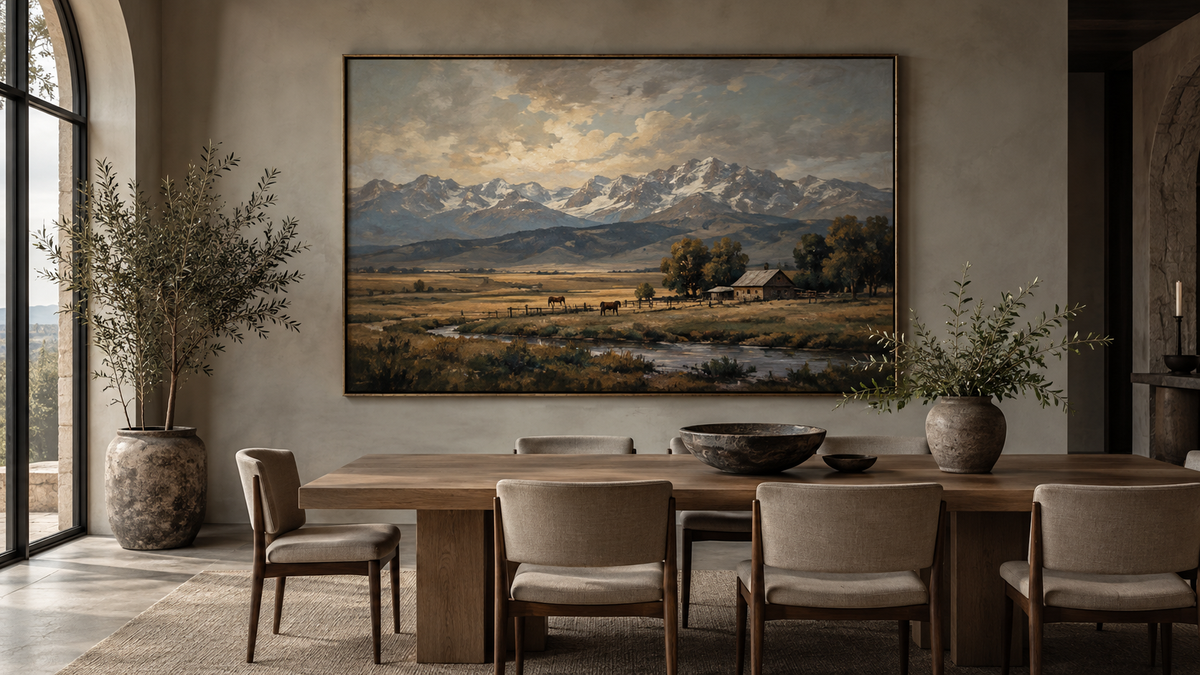
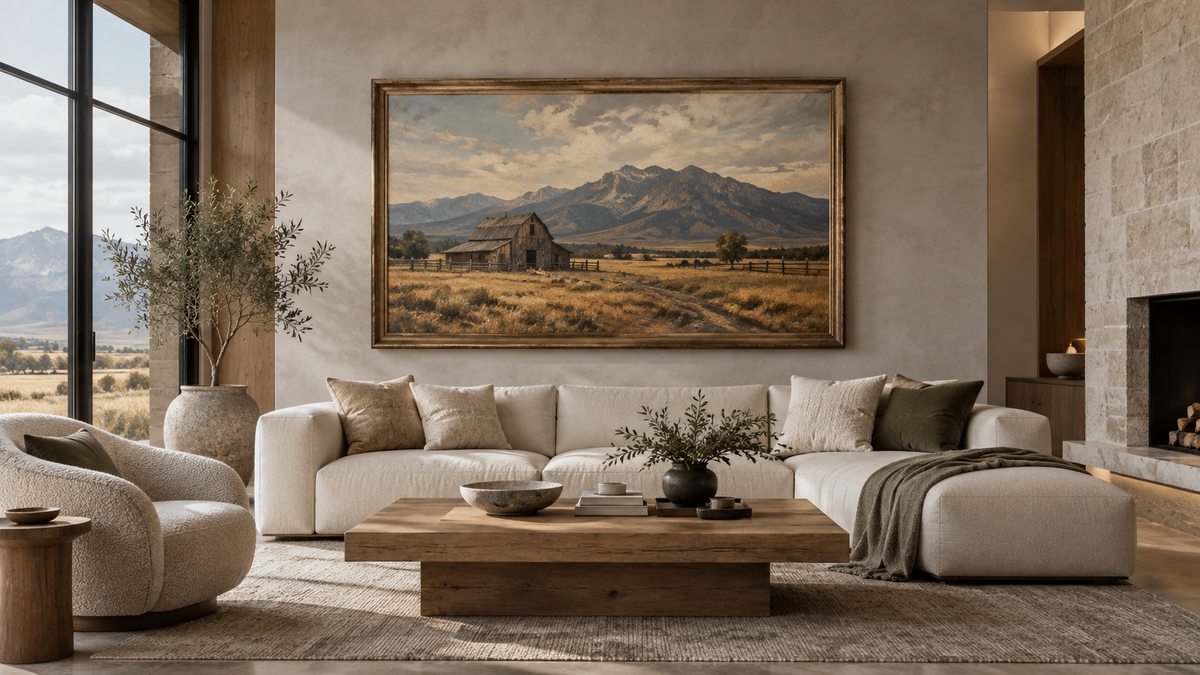
A large vintage landscape above a modern sofa can immediately become the focal point of the room.
A Western-inspired painting above a console can add character to an otherwise simple wall.
A traditional botanical or still life can soften a minimalist dining area.
Using one strong artwork also prevents the interior from becoming overly themed.
The vintage element becomes a highlight rather than the entire identity of the room.
Let Modern Furniture Create Contrast
Vintage artwork often looks more interesting when it is not surrounded by vintage furniture.
A weathered American landscape can feel surprisingly sophisticated above a clean contemporary sofa.
A ranch painting can work beautifully beside simple oak furniture.
An old-world floral painting can become more expressive when placed in a modern dining room.
The contrast allows both elements to stand out.
The furniture keeps the room feeling current.
The artwork adds warmth and history.
Together, they create a space that feels layered instead of predictable.
Use Color to Connect Old and New
The easiest way to make vintage artwork feel natural in a modern interior is through color.
Look for one or two tones in the painting that relate to the room.
For example:
- Warm brown can connect with wood furniture.
- Muted olive can work with natural fabrics.
- Soft blue can complement a neutral interior.
- Ochre and rust can add warmth to beige walls.
- Black or deep brown details can relate to darker furniture or metal accents.
The colors do not need to match exactly.
Small relationships are enough to make the artwork feel intentional.
This also allows the painting to maintain its own personality instead of disappearing into the room.
Vintage Americana Adds Character
Vintage Americana art works especially well in modern American interiors because it combines familiarity with visual storytelling.
Popular subjects include:
- Ranch landscapes
- Horses
- Open farmland
- Mountain views
- Barns
- Rural roads
- Western scenery
These subjects can introduce a sense of place and nostalgia.
They also pair naturally with materials often used in modern interiors, including oak, leather, linen, stone, wool, and aged metal.
The result can feel warm and refined rather than rustic or overly traditional.
Keep the Surrounding Decor Simple
If the artwork already has a strong subject, detailed brushwork, or an aged appearance, the surrounding area does not need many additional decorations.
A clean wall, simple sofa, wooden console, or single ceramic object may be enough.
This helps the painting remain the visual focus.
It also prevents a vintage-inspired artwork from making the entire room feel visually heavy.
Modern interiors benefit from negative space.
That empty space gives older-looking artwork room to breathe and creates a more sophisticated relationship between the painting and the room.
Use Scale to Make Vintage Art Feel Contemporary
Scale can completely change how vintage art feels.
A very small traditional painting may look decorative.
A large version of the same subject can feel bold and contemporary.
This is especially effective with landscapes and Western scenes.
An oversized mountain or ranch painting above a sofa can feel almost architectural.
Instead of reading as a small traditional decoration, it becomes a statement piece.
Large-scale art also works particularly well in modern homes because the furniture and architecture are often simpler.
The artwork has enough space to make an impact without competing with too many other elements.
Hand-Painted Texture Helps Bridge the Styles
Hand-painted oil paintings naturally combine traditional craftsmanship with modern interior design.
Visible brushwork, layered paint, and palette-knife texture create physical depth.
These surfaces work beautifully with modern materials such as plaster walls, stone, linen, wood, and leather.
The texture also prevents vintage-style artwork from feeling flat or overly decorative.
Natural light changes how the painted surface appears throughout the day.
This makes the artwork feel more alive and helps connect it with the material quality of the room.
Avoid Making the Room Feel Themed
One vintage painting can add character.
Too many matching vintage elements can make a modern home feel like a themed interior.
If you choose Western artwork, for example, you do not need to add horseshoes, rustic signs, cowhide, and multiple ranch objects around it.
Let the painting tell the story.
Keep the rest of the room balanced and restrained.
A modern sofa, simple lighting, natural wood, and one strong Western painting can often create a more sophisticated result than using several obvious decorative references.
Subtlety usually makes vintage art feel more timeless.
Vintage Art Can Work Beyond Rustic Homes
Vintage artwork is not limited to farmhouse or rustic interiors.
It can work beautifully in:
- Contemporary homes
- Transitional interiors
- Organic modern spaces
- Mid-century inspired rooms
- Modern traditional homes
- Minimalist interiors
The key is balance.
In a contemporary room, vintage artwork can add warmth.
In a minimalist space, it can introduce personality.
In a transitional home, it can connect traditional and modern elements naturally.
This flexibility is one reason vintage-inspired art remains useful even as interior trends change.
Choose Artwork for the Feeling, Not Only the Style
When selecting vintage art, do not focus only on whether it fits a design category.
Consider the feeling it creates.
Does the landscape feel peaceful?
Does the Western scene remind you of travel or open spaces?
Does the painting make the room feel warmer?
Does it have colors you enjoy living with?
These questions often matter more than whether the painting perfectly matches the furniture.
The most successful interiors usually contain at least a few elements chosen because they are genuinely loved.
That personal response is what makes a home feel authentic.
Final Thoughts
Mixing vintage art with modern interiors is ultimately about contrast and balance.
Modern furniture provides simplicity.
Vintage artwork adds story, warmth, and depth.
Natural materials help connect the two.
And thoughtful scale allows the artwork to feel intentional rather than decorative.
A hand-painted Americana landscape, Western ranch scene, or vintage-inspired oil painting can give a modern home something that perfectly coordinated furniture often cannot:
character.
The best result is not a room that looks completely vintage or completely modern.
It is a home where different periods, textures, and ideas feel naturally connected.
Frequently Asked Questions
Can vintage artwork work in a modern living room?
Yes. Vintage artwork often creates an attractive contrast with clean modern furniture and can make the room feel warmer and more personal.
What type of vintage art works best in modern homes?
Landscapes, Western scenes, botanical paintings, still life art, equestrian subjects, and Vintage Americana artwork can all work well.
Should vintage artwork match my furniture?
No. A few shared colors or materials are usually enough. Contrast often makes the artwork more interesting.
Can I use large vintage artwork?
Yes. Large-scale vintage paintings can feel surprisingly contemporary and work especially well above sofas, beds, or large consoles.
How do I keep vintage art from making my home feel old-fashioned?
Keep the surrounding furniture and decor relatively simple and modern. Let the vintage artwork act as the main historical or nostalgic element.