
Why Large Empty Walls Can Feel Difficult to Decorate
Large walls offer a lot of possibilities, but they can also be surprisingly difficult to decorate.
When a wall is too empty, the room may feel unfinished.
When too many small objects are added, the same wall can quickly feel cluttered.
The challenge is finding the right visual balance.
Artwork is often one of the most effective solutions because it can fill a large area without adding unnecessary physical objects to the room.
A single substantial painting can create structure, color, and personality at the same time.
Instead of treating the wall as an empty surface that needs to be filled, it is more useful to think of it as an opportunity to create a focal point.
Start With the Scale of the Wall
Before choosing a subject or color, consider the size of the wall itself.
A large wall usually needs artwork with enough visual weight.
One of the most common decorating mistakes is choosing a painting that is too small.
A beautiful artwork can still feel lost when surrounded by too much empty wall space.
This is especially common above:
- Large sofas
- Sectional seating
- Beds
- Fireplaces
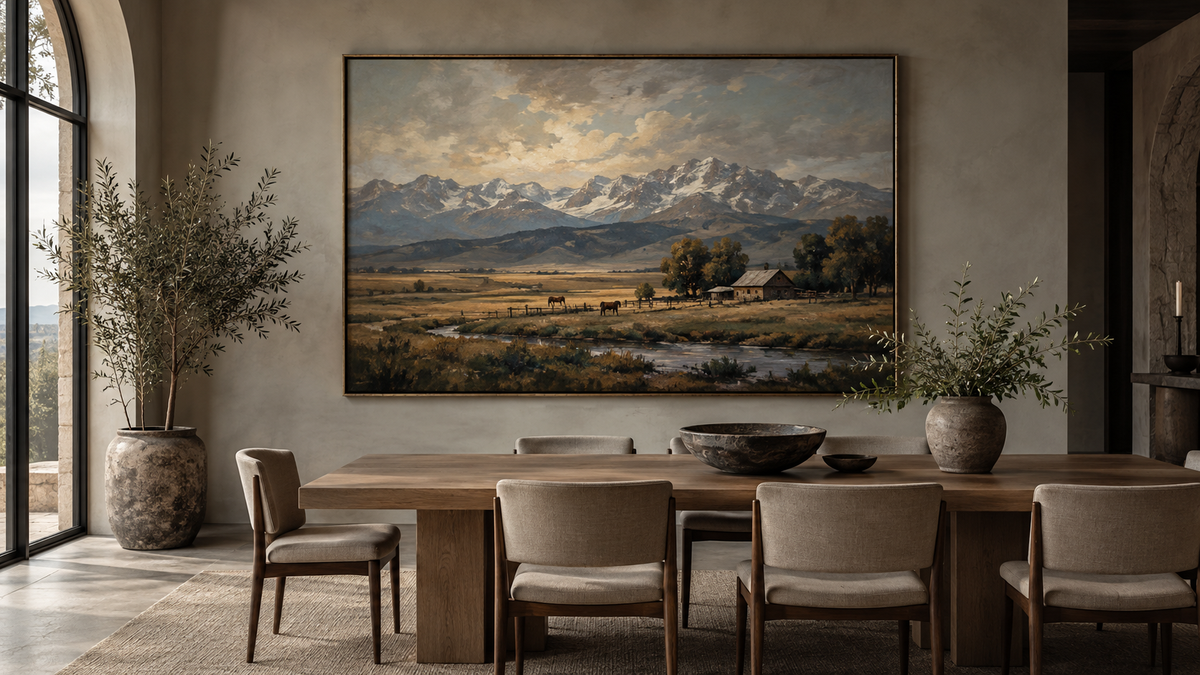
- Dining tables
- Wide consoles
When artwork is placed above furniture, it should feel connected to the piece below it.
The goal is not to cover the entire wall.
Instead, the painting should be large enough to create a clear relationship with the furniture and architecture around it.
One Large Painting Can Be Enough
A large wall does not always require several artworks.
In many interiors, one oversized painting creates a stronger and cleaner result.
A single large piece gives the eye one clear focal point.
It can also make the room feel calmer because there are fewer competing visual elements.
Large landscapes work especially well when you want to create a sense of openness.
Abstract artwork can introduce movement and texture.
Vintage-inspired paintings can add warmth and character.
The subject can vary, but the important factor is presence.
A large hand-painted oil painting can become part of the room's architecture rather than simply looking like decoration placed on the wall.
Consider the Furniture Below the Artwork
Artwork should not be selected in isolation.
The furniture below it plays an important role in determining scale and placement.
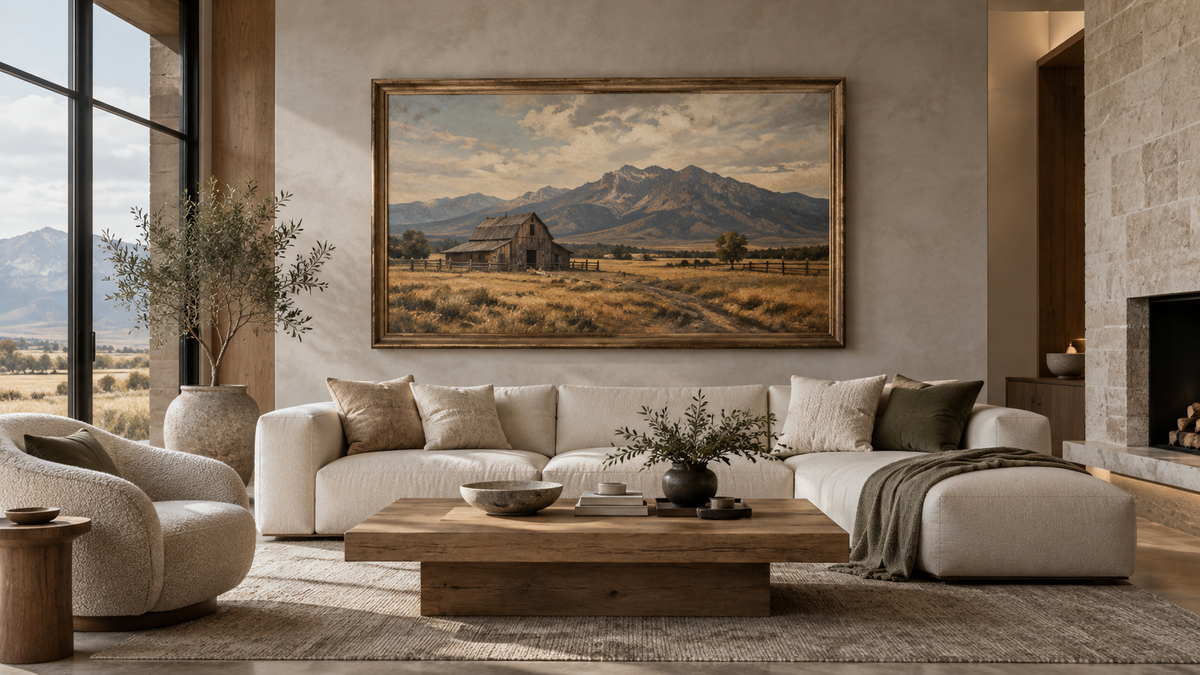
For example, artwork above a sofa should generally feel centered with the seating arrangement rather than with the entire wall.
A large horizontal painting often works naturally above a wide sofa because both share similar proportions.
Above a narrow console, a vertical or medium-width painting may feel more balanced.
Above a bed, one substantial horizontal artwork can create a calm and unified composition.
The relationship between artwork and furniture is often more important than the relationship between the artwork and the wall itself.
When these elements feel connected, the entire area looks more intentional.
Use Orientation to Shape the Space
The orientation of artwork can influence how a room feels.
Horizontal paintings visually widen a space.
They are particularly effective above sofas, beds, sideboards, and dining furniture.
Vertical paintings emphasize height.
They can work well on narrow walls, beside doors, near staircases, or in rooms with high ceilings.
Square artwork creates a more stable, balanced feeling and can be useful when the wall area is relatively symmetrical.
The shape of the artwork does not need to exactly copy the wall.
But choosing the right orientation can strengthen the proportions of the room.
Large Landscapes Can Create a Sense of Space
Landscape art is especially effective on large walls.
Wide horizons, open fields, mountain ranges, rivers, and distant scenery naturally create visual depth.
This can make an interior feel more expansive.
In American-inspired interiors, vintage landscapes, ranch scenes, mountain views, open farmland, and Western imagery can add both depth and character.
These subjects often work particularly well with wood furniture, leather, linen, stone, and warm neutral interiors.
A large landscape painting can create the impression of looking through another window.
That visual openness makes it an excellent choice for living rooms and dining spaces.
Abstract Art Works Well When the Room Needs Energy
Not every large wall needs a recognizable subject.
Abstract paintings can be particularly effective when the room already contains strong furniture, architectural details, or natural materials.
Instead of adding another literal image, abstract art introduces color, movement, and texture.
A softly textured abstract can calm a modern room.
A more expressive composition can add energy to a simple interior.
Large abstract artwork is also useful when you want the painting to support the room's atmosphere without telling a specific story.
In these cases, color and surface become more important than subject.
Use Color to Connect the Painting With the Room
Large artwork has a strong visual influence, so color matters.
The painting does not need to match the room perfectly.
In fact, perfect matching can make the space feel overly controlled.
A better approach is to create a few visual connections.
A warm brown in the artwork may relate to wooden furniture.
Muted green may connect with natural fabrics or plants.
Soft blue can introduce contrast into a warm neutral room.
Ochre or terracotta can add warmth to beige and cream interiors.
The goal is not repetition.
It is relationship.
When the colors in a painting communicate with the surrounding room, the artwork feels integrated without disappearing into the decor.
Let Texture Add Depth to a Large Wall
Large walls benefit from texture because broad flat surfaces can otherwise feel visually empty.
Hand-painted artwork naturally provides this.
Visible brushwork, layered oil paint, and palette-knife marks create small highlights and shadows across the surface.
When the artwork is large, these details become even more noticeable.
From across the room, the painting creates one complete image.
Closer up, the surface reveals individual brushstrokes and layers of paint.
Natural light can also change how the painting looks throughout the day.
This makes hand-painted oil art particularly effective on large feature walls where the artwork has enough space to be appreciated from both near and far.
Avoid Filling the Wall With Too Many Small Pieces
A gallery wall can work beautifully, but it is not always the best answer for a very large wall.
Many small pieces require careful spacing, framing, and composition.
If the arrangement lacks a clear structure, the wall can quickly feel fragmented.
If you prefer a cleaner or more relaxed interior, one large artwork may be the better choice.
Another option is a simple pair or triptych.
The important thing is to maintain enough visual weight.
Several very small artworks placed on a large wall can sometimes make the wall appear even larger and emptier.
Scale matters more than quantity.
Keep Enough Space Around the Artwork
Large artwork needs breathing room.
Placing a painting too close to the ceiling, nearby furniture, or architectural details can reduce its impact.
Some surrounding empty space helps define the artwork.
It allows the eye to understand where the painting begins and ends.
This is especially important when the artwork contains a detailed subject or strong texture.
The surrounding wall becomes part of the presentation.
You do not need to fill every remaining space with lamps, shelves, mirrors, or decorative objects.
Sometimes the strongest arrangement is also the simplest.
Think About Viewing Distance
Large art is often seen from different points within a room.
This makes viewing distance important.
A painting above a sofa may be viewed closely when someone is sitting nearby, but also from across the room when entering the space.
Good large-scale artwork should work at both distances.
From far away, the composition should remain clear.
From closer positions, texture, brushwork, and smaller details can become more visible.
This is one reason hand-painted oil paintings work particularly well as statement pieces.
They offer one experience from across the room and another when viewed up close.
Use Lighting to Strengthen the Artwork
Lighting can dramatically affect how large artwork appears.
Natural daylight often brings out subtle variations in color and texture.
Side lighting can emphasize raised brushwork.
Soft evening lighting can make deeper colors feel warmer and more intimate.
When possible, avoid harsh direct glare on the painting.
Instead, use natural light, ceiling lighting, picture lights, or nearby lamps to illuminate the area gently.
The goal is not to make the artwork look artificially bright.
It is to allow its surface and colors to remain visible throughout different times of day.
Choose a Piece You Want to Live With
Large wall art has a strong presence.
Because of that, it is especially important to choose something you genuinely enjoy.
A large painting will influence the room more than a small decorative object.
It may become one of the first things you notice when entering the space.
So instead of choosing only according to current trends, think about long-term appeal.
Would you still enjoy the subject in several years?
Could the artwork work with different furniture?
Would you want to move it to another room in the future?
When the answer is yes, the painting is more likely to become part of the home rather than simply part of one decorating phase.
Final Thoughts
Decorating a large empty wall does not need to be complicated.
Start with scale.
Look at the furniture below the wall.
Consider whether the room needs openness, warmth, energy, or calm.
Then choose artwork with enough presence to support that feeling.
A large landscape can make a room feel more expansive.
An oversized abstract painting can introduce texture and movement.
A vintage Americana scene can bring warmth and character.
And a hand-painted oil painting can add physical depth that changes with the light.
The goal is not simply to fill the wall.
It is to give the room a focal point that feels intentional, balanced, and personal.
Frequently Asked Questions
What size artwork is best for a large wall?
Large walls generally need artwork with enough visual presence to balance the space. The correct size depends on the wall and nearby furniture, but oversized artwork often works better than several pieces that are too small.
Is one large painting better than a gallery wall?
It depends on the room. One large painting creates a cleaner focal point, while a gallery wall can add more variety and detail. Both can work when the scale is appropriate.
What type of artwork works best above a sofa?
Large horizontal paintings, landscapes, abstract artwork, and other statement pieces often work especially well above wide sofas.
How high should large wall art be hung?
Artwork should usually remain visually connected to the furniture below it and should not feel too close to the ceiling. Eye-level placement is generally a useful starting point.
Does large wall art work in small rooms?
Yes. One appropriately chosen large artwork can sometimes make a smaller room feel more intentional and visually calm compared with many small decorative pieces.