

Why Art Changes the Warmth of a Room
A room can be beautifully furnished and still feel slightly unfinished.
Sometimes the missing element is not another piece of furniture.
It is art.
Artwork adds emotion to a space in a way that many decorative objects cannot.
A warm landscape can make a room feel more relaxed.
A nostalgic Western scene can introduce character.
A textured abstract painting can soften a modern interior and prevent it from feeling too minimal.
Art creates a visual layer between the architecture of a room and the people living inside it.
That is why the right painting can make a home feel less designed and more lived in.
Start With Warm and Natural Colors
Color is one of the fastest ways to change the emotional feeling of a room.
Warm colors tend to make interiors feel more comfortable and grounded.
This does not mean every painting needs to contain strong reds or oranges.
In fact, many of the most inviting interiors use softer natural tones.
Consider colors such as:
- Warm beige
- Soft brown
- Ochre
- Muted olive
- Dusty blue
- Terracotta
- Cream
- Soft gray
These colors work especially well with wood, linen, stone, leather, and other natural materials.
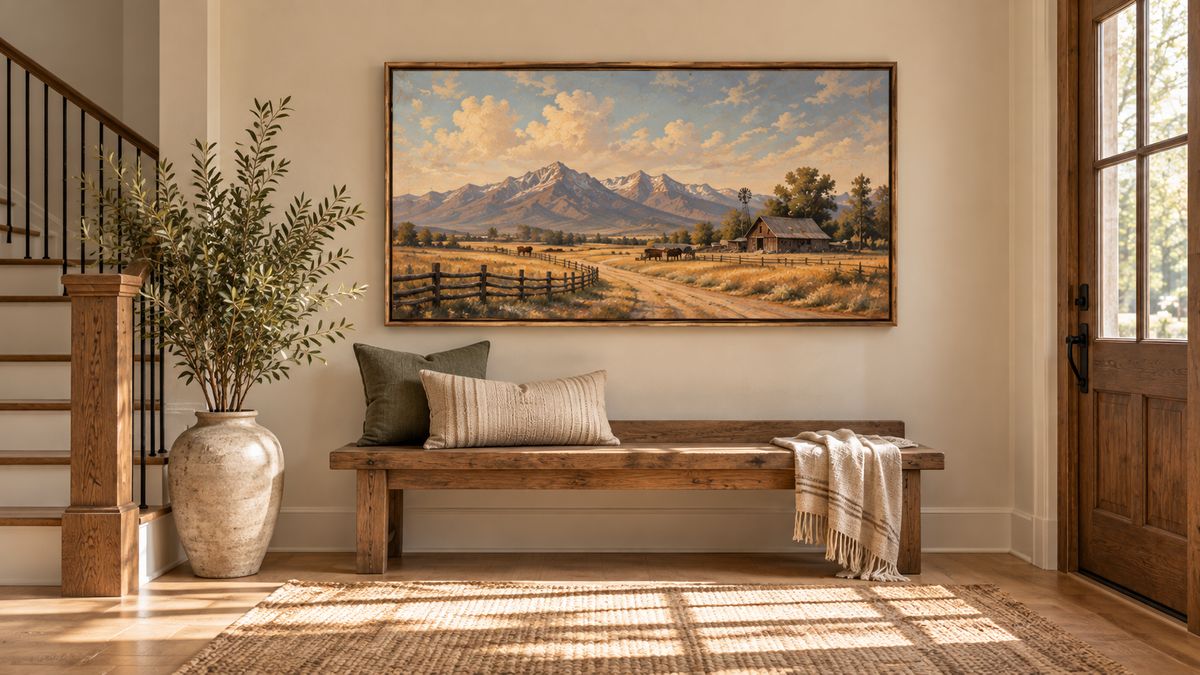
A landscape painting with warm golden fields, for example, can connect beautifully with wooden furniture.
A muted abstract painting can help balance a bright room while still keeping the atmosphere soft.
The goal is not to match every object.
It is to create a visual relationship between the artwork and the rest of the room.
Choose Subjects That Feel Familiar and Comfortable
The subject of a painting has a strong influence on how it affects a space.
Certain subjects naturally create a more inviting atmosphere.
Landscapes are one example.
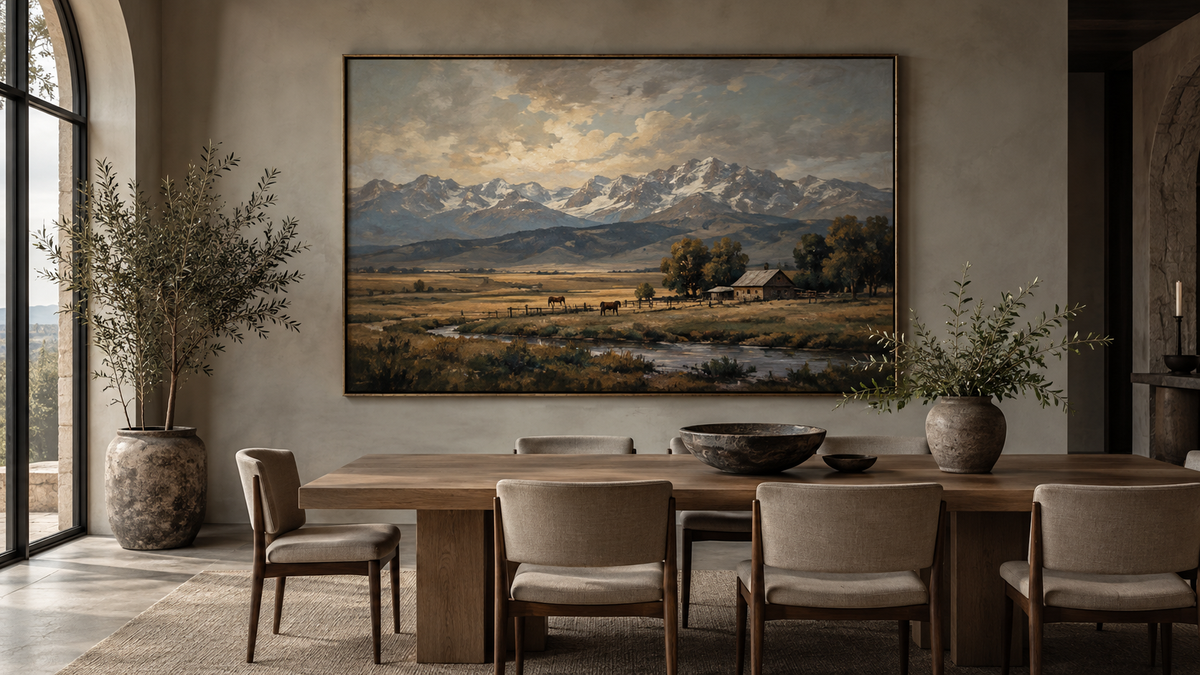
Open fields, mountains, quiet roads, rivers, forests, and rural scenery can introduce a sense of calm and familiarity.
Vintage Americana art can add another kind of warmth.
Barns, horses, ranch scenes, old roads, and Western landscapes often bring a sense of nostalgia and story into the room.
Still life paintings, botanicals, and subtle figurative works can also make a home feel more personal.
These subjects do not need to be dramatic.
Often, the most comfortable artwork is the kind that feels easy to live with every day.
Let Texture Add Softness and Depth
Texture plays an important role in creating warmth.
A printed image can add color to a room, but hand-painted artwork adds physical surface as well.
Visible brushstrokes, layered paint, and palette-knife marks create shadows and variation that change with the light.
This is especially noticeable in rooms with natural daylight.
In the morning, the painting may appear softer.
Later in the day, stronger side light may reveal deeper texture and more visible brushwork.
This changing surface gives the artwork a more tactile and organic quality.
It also connects naturally with other textured materials such as woven rugs, linen sofas, wool blankets, wood grain, stone, and ceramics.
For this reason, hand-painted oil paintings can help make a space feel less flat and more layered.
Use Larger Artwork to Make a Room Feel Complete
A large empty wall can make a room feel cold, even when the rest of the interior is well designed.
One large artwork can often solve this immediately.
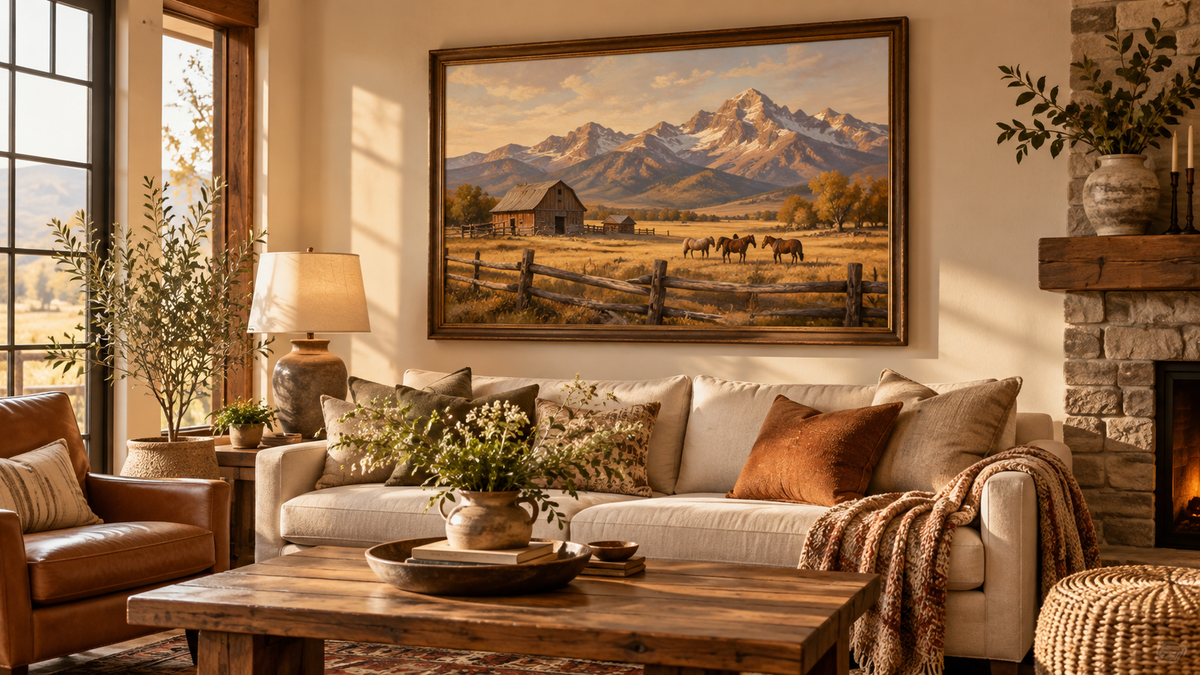
A substantial painting above a sofa, fireplace, or console gives the eye a clear place to rest.
It also creates visual weight.
This is especially useful in living rooms, where large furniture can make small artwork feel disconnected.
A large landscape can create openness.
A textured abstract can add softness.
A vintage-inspired painting can bring warmth and personality.
The right scale helps the artwork feel like part of the architecture rather than a small decoration added afterward.
Do Not Overfill Every Wall
Warmth does not come from adding more and more objects.
In fact, too much wall decor can make a room feel visually busy.
A welcoming home usually includes some empty space.
Empty walls help important artwork stand out.
They also prevent the room from feeling crowded.
Instead of filling every wall, choose a few areas where art can have more impact.
For example:
- One large painting above a sofa
- One vertical piece near an entry
- A smaller artwork in a reading corner
- A quiet painting above a console
This creates rhythm.
Some walls become visual focal points, while others give the room space to breathe.
Pair Art With Natural Materials
Warm interiors often rely on materials with visible texture and character.
Wood, linen, leather, stone, rattan, wool, and ceramics all create a sense of comfort because they feel natural and tactile.
Artwork can strengthen that effect.
A rustic landscape may echo the grain of a wooden coffee table.
A muted abstract can work beautifully beside linen upholstery.
A Western painting can feel especially natural in a space with leather, aged wood, or warm metal accents.
The relationship does not need to be obvious.
Small visual connections are usually enough.
When materials and artwork feel related, the room becomes more cohesive without looking overly coordinated.
Use Art to Add Character to Neutral Interiors
Neutral interiors are popular because they feel calm and timeless.
But if everything is beige, white, and light wood, the room can sometimes feel too restrained.
Artwork is an effective way to introduce character without changing the entire interior.
A painting with deeper earth tones can create contrast.
A vintage landscape can introduce warmth.
An expressive hand-painted piece can add movement and texture.
This allows the room to stay visually calm while becoming more memorable.
Art is often one of the easiest ways to give a neutral interior personality.
Create Warmth Through Nostalgia
Not all warmth comes from color.
Sometimes it comes from memory.
Artwork with a sense of nostalgia can make a room feel more emotionally grounded.
Vintage-inspired paintings, old rural scenes, traditional landscapes, ranch imagery, and historical subjects can create a connection to another time.
They can make a modern home feel less new and more layered.
This contrast is particularly effective in contemporary interiors.
A clean modern sofa beside a vintage-style oil painting can create a more interesting room than using only modern pieces.
The tension between old and new often makes a space feel collected rather than staged.
Think About Light Around the Artwork
Lighting changes how art feels.
Natural light tends to make warm colors more visible and can emphasize painted texture.
Soft evening lamps can make landscapes and darker vintage paintings feel more intimate.
When placing artwork, consider how the wall looks at different times of day.
A painting near a window may change noticeably between morning and afternoon.
A piece above a console can feel completely different once nearby lamps are turned on.
Warm interiors often benefit from layered lighting, and artwork becomes part of that experience.
The painting is not only something you look at.
It interacts with the room around it.
Let Art Reflect the Personality of the Home
A welcoming home should not feel like a showroom.
It should feel personal.
That means the artwork does not need to follow one strict interior trend.
You may love a Western landscape, a textured abstract, and a traditional botanical painting at the same time.
These pieces can still work together if they reflect your taste.
Personal choices make a room more comfortable because they create authenticity.
A home becomes inviting when it feels as though someone truly lives there.
Artwork plays a major role in creating that feeling.
Choose Pieces You Can Live With for Years
Trends change.
Warm minimalism may be popular today.
A different color palette may become popular next year.
But artwork often stays much longer.
That is why it is worth choosing pieces that feel meaningful beyond a current trend.
Ask yourself:
Would I still enjoy this painting if I changed the sofa?
Could it work in another room?
Would I want to take it with me if I moved?
If the answer is yes, the artwork is more likely to become part of the home rather than just part of a decorating phase.
Final Thoughts
A warm and inviting home is not created by one specific design style.
It comes from layers.
Color.
Texture.
Natural materials.
Light.
Objects with meaning.
And artwork that brings emotion into the space.
A hand-painted landscape can make a living room feel calmer.
A vintage Americana painting can add nostalgia and character.
A textured oil painting can soften a modern interior and make it feel more tactile.
The best artwork does not simply decorate a wall.
It helps the whole room feel more complete, personal, and comfortable.
Frequently Asked Questions
What type of artwork makes a room feel warmer?
Landscapes, vintage-inspired paintings, textured abstracts, botanical art, and artwork using warm or earthy colors can all help create a more inviting atmosphere.
What colors make wall art feel cozy?
Warm beige, brown, ochre, muted green, terracotta, cream, soft blue, and other natural tones often work well in comfortable interiors.
Does large artwork make a room feel warmer?
It can. Large artwork helps fill visual space and can make a room feel more complete, especially when placed above large furniture such as a sofa or console.
Is hand-painted art better for creating texture?
Hand-painted artwork offers real brushstrokes, layered paint, and physical surface variation, which can add more tactile depth to an interior.
Can vintage art work in a modern home?
Yes. Vintage-inspired artwork often creates an attractive contrast with modern furniture and can make a contemporary room feel more layered and personal.